
Most parents who ask this are not looking for a yes that lets them stop worrying. They have a child who likes games, stories or taking things apart, and they want to know whether a live online coding class will actually help — or whether it will be another weekly hour that quietly fades away.
The honest answer is that it can be worth it, but it is not automatically worth it. A class helps when a child is curious, ready to sit for about an hour, and has a real teacher in a small group who can help when they get stuck. It is less useful when the child is not interested, when the group is so large that they sit quietly and fall behind, or when the only option is a recorded video with no one to ask. A free trial class will usually tell you more than any article can.
When a live online class is worth it
A good class earns its place in the week by changing what your child can do, not by filling a slot on a timetable.
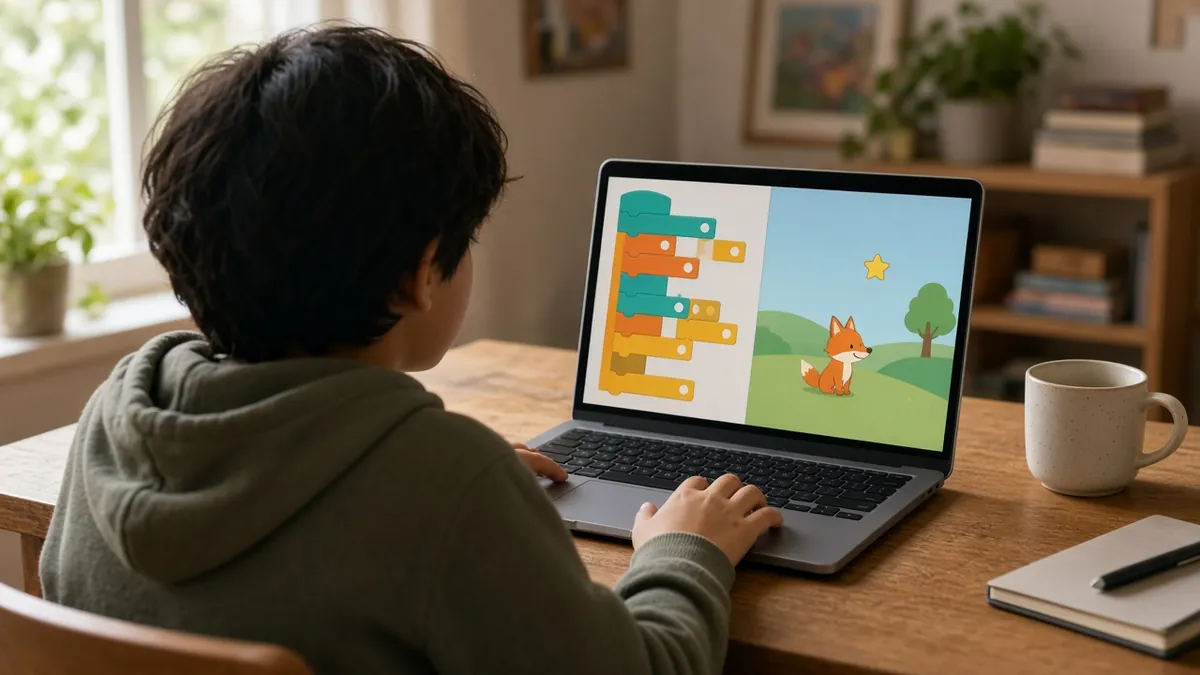
It is more likely to be worth it when your child actually wants to make something — a game, an animation, or a story a sibling can click through. It also helps if they can follow a short set of spoken steps and stay with a task for around an hour, with a teacher there to help. Many children are ready around the age of 7. Starting later is fine. Our kids courses are for ages 7 to 16, and a twelve-year-old who is new to this is not behind. If you are still deciding when to begin, we wrote a separate guide: What age should kids start coding?.
The class itself matters as much as the child's readiness. Live online lessons, in small batches, give a child someone to ask in the moment. A child who is stuck can get help before the frustration sets in. A child who has finished early can be given a next challenge, instead of ten quiet minutes of waiting.
It also helps when there is a clear path after the first course. Many children start with Scratch, move on to Python when they are ready to type real code, and later take an AI course once they are comfortable on a computer. That path means the first class is a beginning, not a dead end.
Practical details count too. The language should feel easy, not like extra work — we teach in English and in Urdu. The times have to work in your time zone, week after week. And you should be able to try a class before you commit. At Kids Skill Time the first class is a free trial.
When it may not be worth it yet
There are times when waiting, or keeping things playful at home, is the kinder choice.
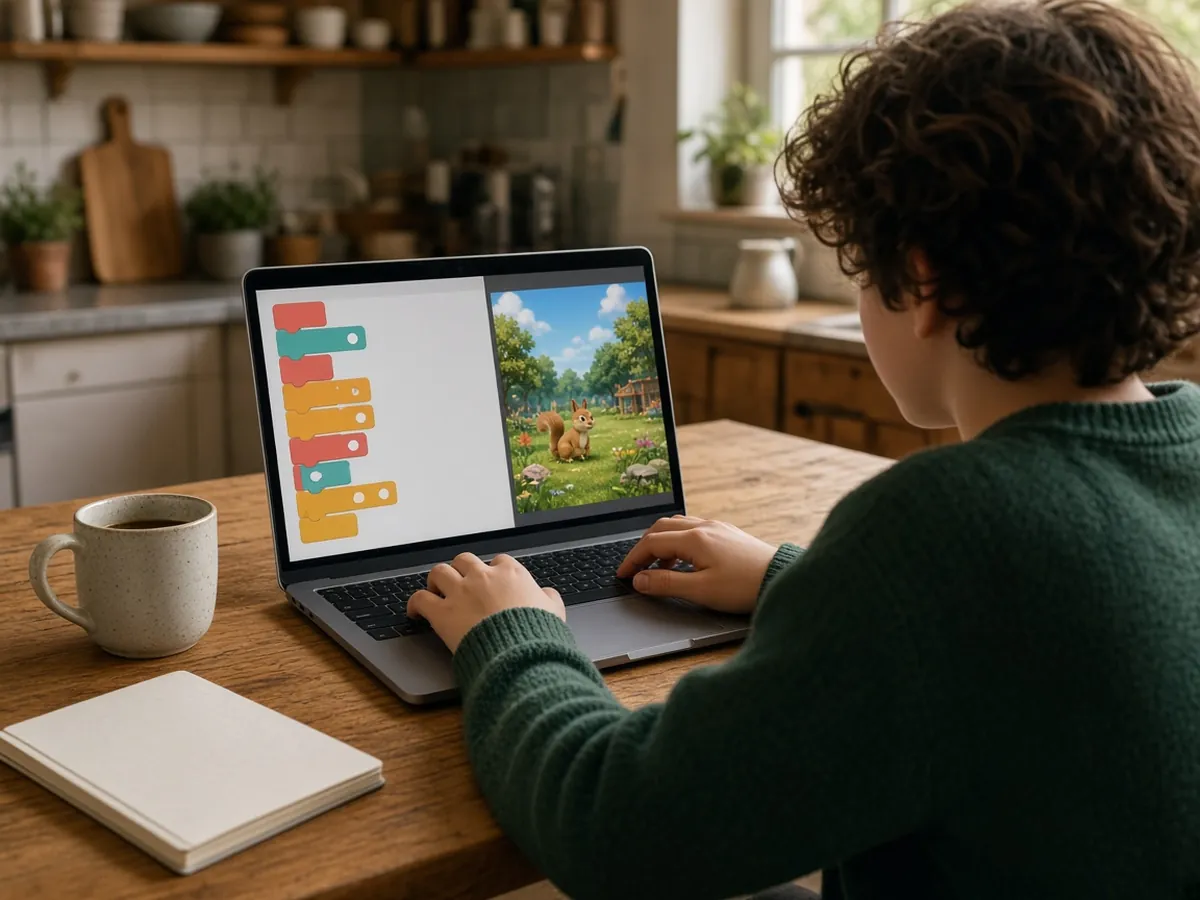
If this is only your idea, and your child does not actually want to make anything, a weekly class can become a struggle. Interest can grow later. Pushing now is more likely to put them off than to create it.
If a full hour still feels like hard work, even with a teacher there to help, it may be early. Younger children can explore with ScratchJr at home — a free, block-based app made for that age — before a formal class. Kids Skill Time's courses for children begin at age 7, and your child does not need to have used ScratchJr first.
A class is also a weaker use of the week when nobody is really teaching. A recorded video can be a useful start, but a child who is stuck has no one to ask. In a very large group, it is easy to sit politely, smile at the camera, and fall behind. A rigid timetable that always starts when your child is hungry, at school, or half asleep will not last, however good the lessons are. And if the class is in a language they are still stretching to follow, the hour can become tiring for the wrong reasons.
None of this means you should give up on the idea. It means the conditions have to be right, for this child, at this moment.
Live classes, videos and apps
Parents often wonder whether a live class is needed at all, when there are so many apps and videos a child can try alone.
Those can be a good first taste. A child can snap blocks together, make a character move, and feel the pleasure of something they built. That kind of play is worthwhile.
What a live class adds is a person. Someone who notices when a child is stuck, who can explain a step in a different way, and who keeps a gentle weekly rhythm so the work does not only happen when motivation is high. Over a few weeks, children are not only following a tutorial. They are building projects they can open again, improve, and explain in their own words.
You do not have to choose one forever. Many families try a little at home first, then join a class when the child is ready for more help and a clearer path.
What to look for, if you do go ahead
If you have decided a class might be a good fit, the next question is how to choose one. We wrote a longer guide on how to choose an online coding class for your child. A short version is this.
Ask who will actually be on the call with your child, not only whose photograph is on the website. Kids Skill Time was founded by Zahra Shah, an AI engineer. She designed the courses, and the classes themselves are live, with a real teacher, not a recorded video. You can read more about her on the About page.
Ask how big the class is, whether you can try a lesson first, what language is used, and when it runs. At Kids Skill Time we teach in small batches. There are three live classes a week, and each one lasts an hour. We agree the times with each family around your time zone, wherever you live, and we can find another slot if plans change. We teach in English and in Urdu.
Ask what children actually make, and how you will hear about their progress. You will not be sitting in the class, and "How was it?" after the call often gets a shrug. Every student at Kids Skill Time gets their own Student login. After each class we post what was learned, the homework, and what the next class will cover, and you can view it any time.
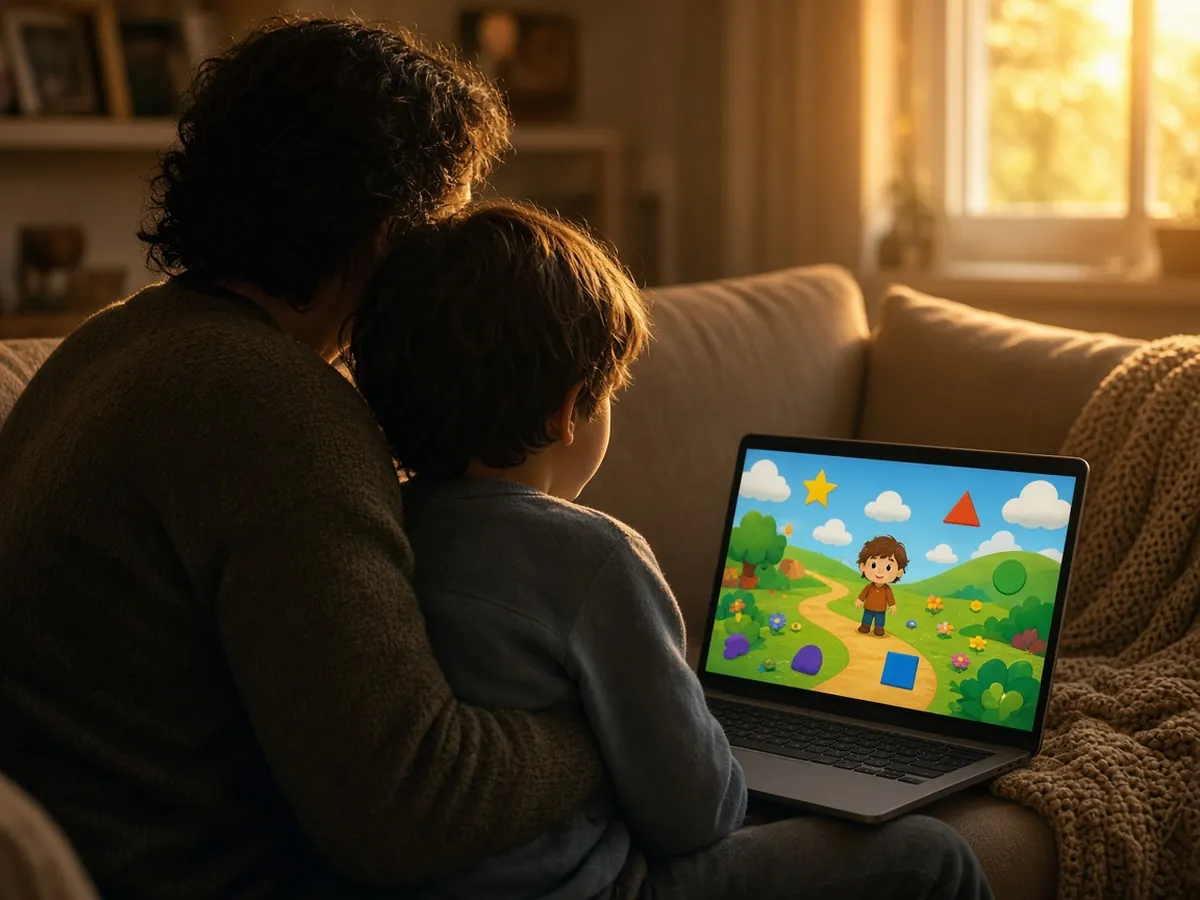
Your child needs a computer — a laptop or a desktop — and a stable internet connection. That is true of any live online class.
A gentle next step
The most useful test is still a single hour. If this sounds like a good fit, you are welcome to book a free trial class, or send us a message on WhatsApp. We will help you choose a starting point, agree a time that works for your family, and take it from there.